 unday mornings in Block 4 Lot 8 had a particular sound back in my hometown. My parents would be up before sunrise, and our home would breathe again after lying still all night. Of course, I would wake up much later and always to songs that had been around far longer than I had been alive. The Carpenters, ABBA, Dean Martin, Neil Diamond, and Dolly Parton; they were a few of the many artists whose songs would rush into my ears the moment I crack my eyes open (and probably why I have a penchant for old music).
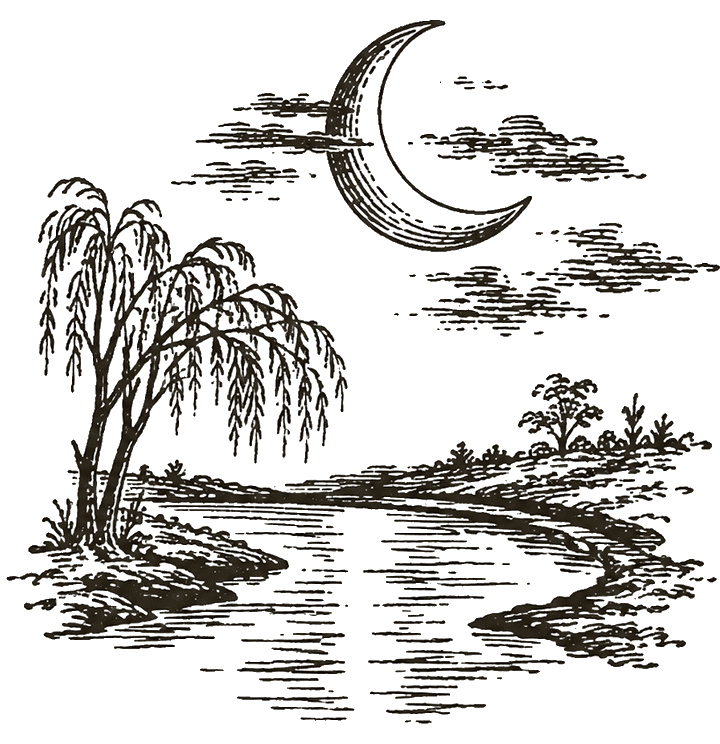
I was around 10 years young when I first heard Audrey Hepburn’s wistful voice singing Moon River, and I remember thinking it was the loneliest song I had ever woken up to. I don’t remember much about that day though, only that the song settled somewhere in my marrow and never quite left. In my mind, the song painted an image of two drifters only coming close, moving down the river side by side, heading in the same direction, yet still in their own separate boats. I’ve come to think that this is the truest description of human connection because, in some fundamental sense, to be human is to be alone.
This is contrary to what we’ve learned about ourselves. We’ve learned that humans are the most social of creatures. We build communities, start relationships, and cultivate societies around our need to be connected with one another. We are even connected to people long dead through traditions that we keep. But at the centre of this web of strings, sits a kind of solitude that we cannot extinguish: we experience the world within the confines of our own private, impenetrable consciousness.
No one has the same memories as you, or feels the emotions attached to them. No one experiences your fears or your joys the way you do. Think of the last decision you made that altered the course of your life—the university you chose after high school, the application you sent or didn’t, the thing you’re still unsure about that’s been weighing on you for days. You can describe everything in detail and they still wouldn’t understand what it cost you. Even with your parents, friends, best friend, or lover, there is always a gap between your inner world and theirs that needs to be crossed. Such is the nature of being human: much of what shapes us is carried alone, even when we are surrounded by people.
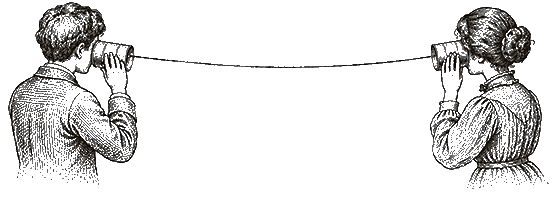
What we have instead are ways of reaching across this distance. Words are perhaps the most immediate of them. They let us come so remarkably close to one another that we practically forget the gap is there. But there are limits to this. We can describe our inner world, translate it, massage the best words we can find into sentences, and still fail to make another person feel the full weight of what we carry.
Much of human life, then, seems to be an attempt to cross this distance—an attempt to understand and to be understood. Communication is one way we do this: by approximating a piece of our inner world and making it accessible to someone else.
Fortunately, we have found more ways to leave pieces of our inner worlds accessible to others. We leave our prints in paintings, in the songs we share, in a poem tucked inside our pockets, in the clothes we choose to wear in the heat of that one sultry Tuesday. Even more, we leave traces of ourselves through fragments of 1s and 0s cast into the digital space. We have never had more ways of staying connected and communicating than we do today.
And yet, strangely enough, all these forms of expression depend on the assumption that we fully understand ourselves. Do you see the problem? Yes, we rarely do. We contradict ourselves. We say things we don’t mean. Our actions fail to match our words. We labour toward a goal we thought would finally make everything feel right in our world, only to stand face to face with it and realize we are no happier than when we started. Sometimes, we don’t understand whether we miss a person, the way they made us feel, or simply who we were when they were around. We even test people—good people—with our words just to validate our own feelings and understanding through how they respond.
This begs the question: if we don’t understand ourselves perfectly, what hope do we have that other people will? The answer gently reveals itself in the lyrics of the song if we read between the lines. The goal of human connection is to not find someone who completely understands us. That is an impossible standard you’re setting for yourself, and one that will almost certainly fail. The meaningful choice to make is to find someone who is willing to keep trying, and travel beside you anyway; someone who continuously attempts to approximate our inner world, even knowing that parts of it will always remain beyond their reach.
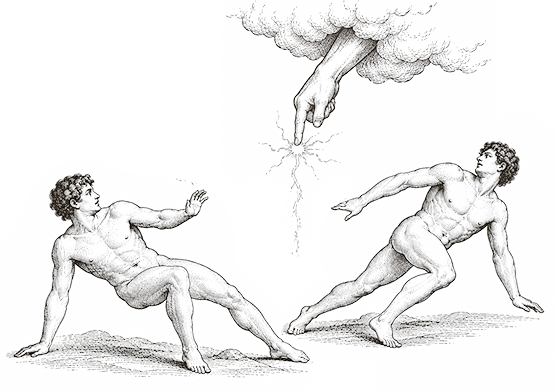
Some people would passionately disagree. People talk about having found someone who knows them better than anyone else; others might call that person their “soulmate” who understands them without explanation as if the gap between their inner worlds had disappeared when they collided. They describe such a person as someone who completes what is missing in them. This idea is hardly new. In Plato’s Symposium, Aristophanes tells us a myth about how humans were once whole beings with two faces, four arms, four legs, and two sets of sexual organs. They were powerful, self-sufficient beings that Zeus feared their strength and split them in half. From that moment onward, each half wandered through the world in search of their other half.
It’s a romantic and bittersweet tale, and I understand why it persists. I’ve had experiences of being understood without explanation—like how someone would always put on the kind of music I felt listening to when I get in the car (to this day I don’t know how they did it), or how a friend would know something was wrong because they noticed the pattern of me buying Häagen-Dazs cookies and cream, which I only buy when I’m stressed (and now you know too). And they would always ask what happened. They always had to ask. They used whatever they had of me that could carry them right around edge where they end and I begin, and the last few inches would be up to me, describing, in words, like everyone else.
We can call them “soulmates”, but they aren’t people who complete us as if we weren’t whole to begin with. I think they’re people with enough empathy to come unusually close to approximating our inner world. These people are more like the concept of limits in calculus: they approach our inner world, infinitely close, but never quite reaching it. It’s what the song describes: two people aware of their separation but decide to travel together anyway.
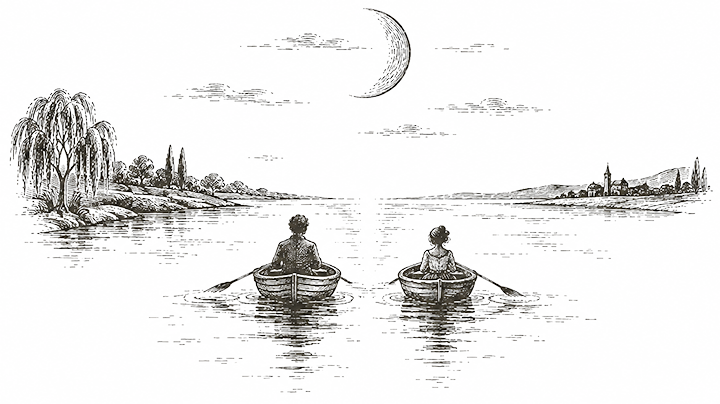
It is important to note that finding this other drifter is plagued with uncertainty. Some people may spend years searching for that kind of connection and get lucky enough to stumble upon it, while others may never find it in the form they desire. We spend most of our adult lives inhabited by the idea of having a “partner”, as though a romantic relationship was one of the boxes we’re expected to check off. Even our music today is obsessed with romantic love.
These days, it’s rare to find a song that’s not about finding someone, losing someone, or wanting someone back, as though romance were the only shared human experience left to write about. Why can’t there be more songs about starting over in a new environment, losing touch with old friends, or even a song about missing the bus as you desperately run after it? From there, it becomes easy to look at being alone as an implication that there is a problem with oneself that needs to be solved. That our soul, in one way or another, needs fixing, when solitude isn’t a defect of one’s existence, but a permanent condition of being human.
Even those fortunate enough to find that companionship cannot escape it forever. One of the earliest surviving works of literature already wrestled with this idea. The Epic of Gilgamesh tells the story of a powerful but arrogant king, who finds Enkidu, his equal, the one person who makes his world survivable, and then Enkidu dies, and Gilgamesh spends the rest of the epic never the same. Four thousand years ago, humans were already writing about a man who found his other drifter and still had to finish crossing the river alone.
But I’m not arguing against human connections, whatever form they may take, merely because they will inevitably end; if anything, I’m doing the opposite.
The fact that we cannot keep one another forever is precisely what gives our time together its weight. Our life on earth isn’t defined by where we began or where we eventually end up, but by what happens along our journey as we move toward our own ends: the people we meet, the places we go, the late night conversations, the blog posts we read (wink), and the moments in which someone chooses to walk beside us.
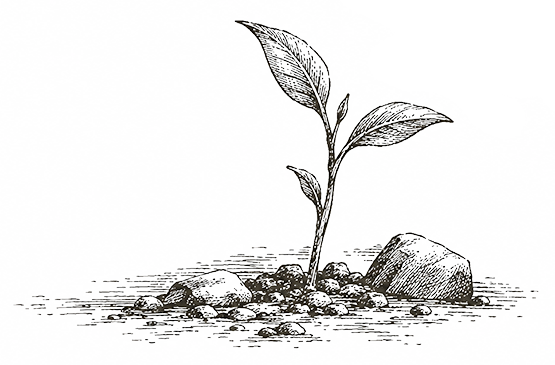
And perhaps, this is all the more reason to stop holding back. To go somewhere new. To speak up first. To risk embarrassment. To let our work, and by extension ourselves, be known, however imperfectly. As the words in the song remind us, “there’s such a lot of world to see.” On this enormous hunk of rock the drifts through space, there are friends we have not met yet, conversations we have not had, blog posts we haven’t read (because I haven’t posted them yet), and lives that may one day briefly intersect with our own.
We can never truly know who we’ll encounter along the river or how long they might travel beside us once we do, nor ascertain what lies beyond the bend. But there is comfort in not knowing what comes next. We may be momentarily travelling our stretch of the river alone as our separate selves, but just as the river ebbs and flows, we too change with it. And this is the beautiful thing about uncertainty: it cuts both ways. Just as much as we are convinced of our own loneliness or how we are uncertain of encountering the kind of human connection we desire, neither can we be certain that our loneliness will last. And perhaps that is enough reason for us to remain hopeful.
If you haven’t found your other drifter, I can’t promise that you will one day. It could be that in this lifetime, you may never. The river, our world, is a turbulent place that can be unforgiving at times. Some people will pass us by; some will stay only briefly before the current takes them someplace else. And sometimes, in the extraordinary occasion that we do encounter the kind of connection we’ve been hoping for, we are hopelessly not ready for them. The best we can do for ourselves, then, is to keep moving, to remain open, and to not miss the rare moments when another boat chooses to travel alongside us.
And if you’re lucky enough to have found one, don't let them slip by carelessly. You will lose them one way or another; that part isn't up for negotiation. Instead, hold your hand out, at least three inches from their edge, because the odds of two people drifting close enough to notice each other's inner world are already absurdly rare, and it would be a cosmological sin to spend the time when your boats align with your hands in your lap looking at anywhere else but each other.
And before I end, I should apologize to you.
I lied when I said Moon River is the loneliest song ever written about human connection. It isn’t. The loneliest song is the one that stays in your head—the words that you leave unsaid. There is much life and love waiting for you in the river still. Go and reach for it.